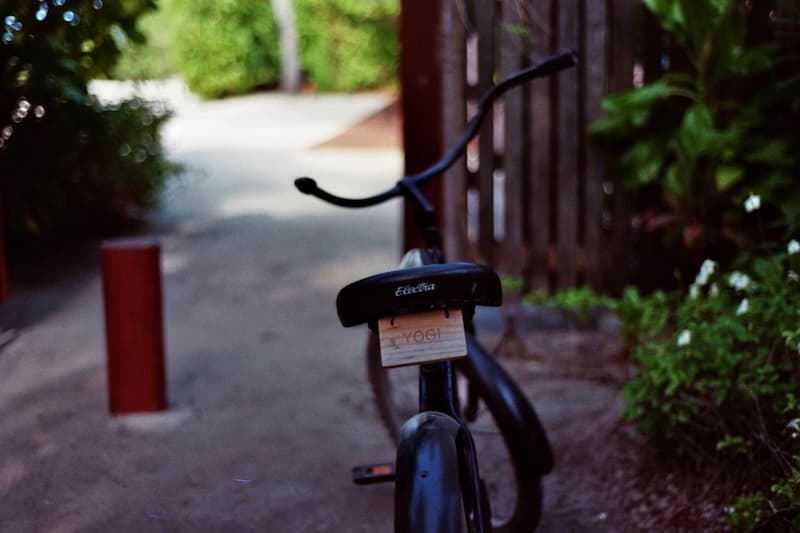
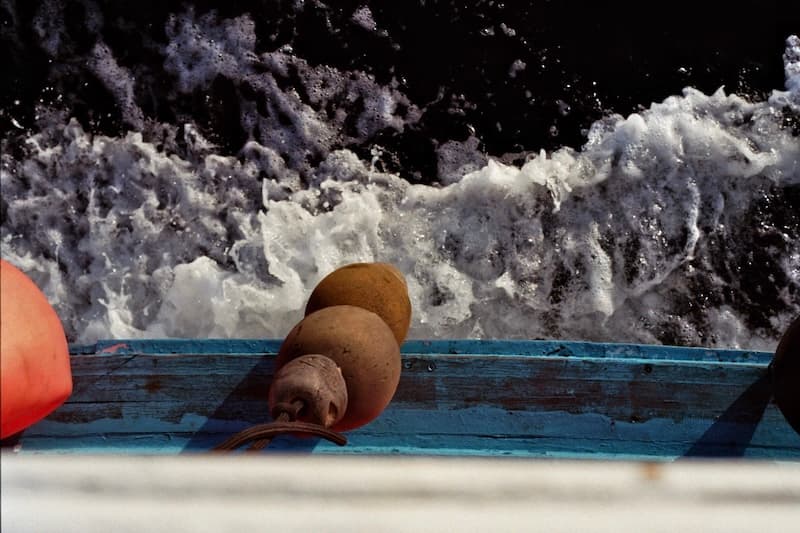
Time Machines Made of Paper
Last year I was at the Leipzig Book Fair, one of the bigger literary fairs in Europe, and picked up a book by Byung-Chul Han called Non-Things. I didn't know his work before. The text on the back caught me, so I bought it almost on impulse and read it the same day, more or less in one go.
The book is about what the information age does to people and societies: to our attention, our sense of what is real and the way we relate to the world around us. Han makes a distinction between things and information. Things, in his view, have something like their own life. They come into being, they change, they get old and at some point they disappear. Because they last for a while and give some resistance, we can build a relationship with them. They can be anchors that give our life a kind of frame and continuity.
Information on the other side is weightless and unstable. It has no real duration, it shows up, circulates and gets replaced by something new almost immediately. It doesn't settle in our surroundings like a physical object does and it doesn't give the same feeling of something solid.
A few days ago this came back to me quite strongly, while I was going through a stack of analog prints from a trip to the Maldives.
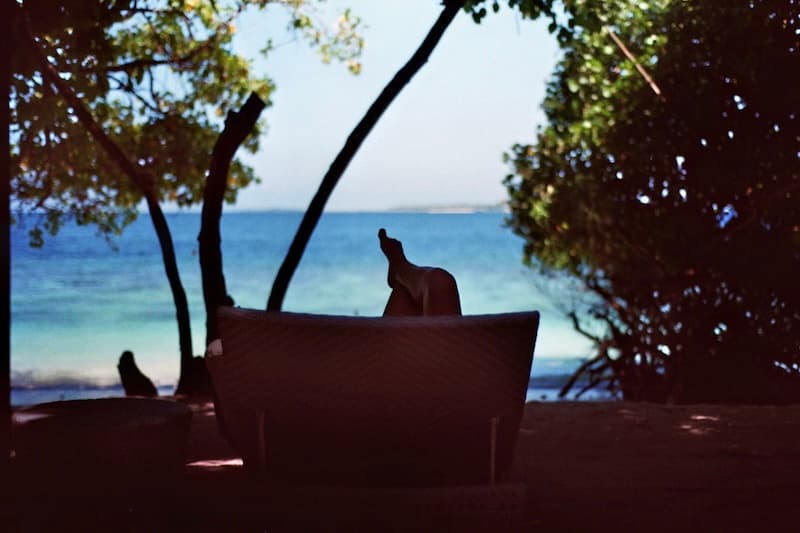
Being there before pressing the shutter
The last years I reduced my daily information intake step by step. I left most of social media and rolling news, especially after the war in Ukraine started, and I noticed how my attention slowly became a bit quieter. When I travel, I go one step further. Not only feeds and notifications, often I also put music and casual reading aside. I have my journal with me and that's mostly it: the place itself and my own thoughts.
It is not about being an ascetic. I just want to give the surroundings a fair chance to get in. If I fill every gap with some input, very little of the place actually stays.
Later at my desk, going through the prints from the Maldives, I was surprised how strong the associations were. Some photos brought back the warm air on my skin, the sand and the water around my feet. Others reminded me of how the sea smelled at certain times of the day, or of the soft light in the bathroom with the open roof, where shade and reflections made quiet patterns on the floor in the afternoon.
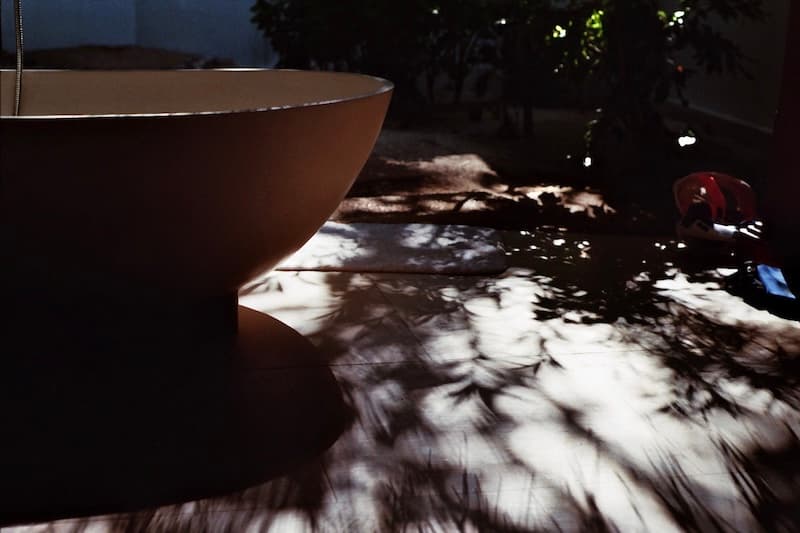
Some pictures brought back tastes, a dinner on one specific evening, or the music in the bar when the sun went down. And with that came the mood I was in, the thoughts that were circling somewhere in the background, the whole feeling of being there.
It felt less like flipping through pictures and more like having a set of small doors back into that time. Reliable ones.
When I scroll through the photos on my phone, I almost never get this kind of reaction. Sure, my habit of information fasting when travelling plays a role. But it doesn't explain everything, because this habit was there before I started to shoot with a mechanical Nikon and film.
I think two things work together here. First, on those trips I am mostly present and not constantly jumping out into virtual spaces. And second, in Han's words, an analog photograph is a "thing" in the full sense.
A photo you can lose
When Han writes about non-things, he treats analog photos as more than images. They are objects too: pieces of film, sheets of paper, physical stuff that can be lost and found again, damaged or given from one person to another. They take up space and they have a history.
An analog photo has a small life cycle. Light from a scene goes through the lens and hits the film. The film gets developed, dried, cut and at some point turned into prints. The prints sit in a box, in an album or on a wall. Over the years they fade a little, get fingerprints, the corners bend. They age together with the people who look at them.
Because of that it is easier to relate to them as some kind of companions. You remember not only what is on them but also where they lived: the drawer, the move they survived, the evenings you went through them with somebody else.
And an analog photo has a very direct connection to something that really existed in front of the lens. The light that touched this person or this landscape is the same light that darkened the grains on the film. The print you hold is quite literally a trace of this meeting between light and matter at one specific moment.
A digital photo is a representation in form of data. The sensor measures the light, turns it into numbers and from there on you mostly deal with patterns in memory chips and file systems.
Nothing wrong with that as such. Digital pictures are convenient, easy to access and technically often very impressive. But they behave differently. They don't age in a visible way and they don't live in your physical space, unless you do the extra step and print them. You can have thousands in your pocket and don't feel that you carry anything.
In practice this makes it very easy to produce much more than you can relate to. It's normal to take hundreds of pictures, upload a few and forget the rest. The single photo loses weight. It becomes one more entry in an endless stream.
When I open a box of prints instead, my attention behaves differently. I slow down almost automatically and each picture gets a bit more time. That there are relatively few of them and that they have a physical history seems to focus the memory, instead of diluting it.
Pictures without a past
Going from film to digital already changes our relationship to images. AI generated pictures add another layer on top. They can look extremely real, the light, the composition, the details of faces and places. But they don't witness any moment in the world.
No camera was pointed at a real scene. Nobody stood in exactly these clothes at exactly this place. The picture comes out of computation, it is not a record of an encounter.
These images have many legit uses and as tools and experiments they can be really impressive. But they belong to what I would call a realm of pure appearance, where the link to lived experience is cut on purpose. If you spend most of your visual life there, it gets harder to trust images as proof that "this happened" or "I was there".
For memory this difference matters, I think. An AI landscape I can find beautiful, but there is nothing to go back to behind the image. When I look at a slightly imperfect analog print from a morning walk, I feel the pull of a day that I really lived.

Old photo albums
Thinking about all this helped me to understand why older people often handle their photo albums with so much care. When the album comes out during a visit and somebody starts telling stories, it's not only about showing pictures. It is about going back into parts of life that were kept in a certain form.
Those albums usually travelled through time with their owners. They were taken out for family gatherings, put back on the shelf, carried along with every move, sometimes repaired when the binding started to fall apart. You know them as objects even before you look inside.
When someone points at a faded photo and starts to talk, I don't think they only build a story from memory. The print itself, how it looks, how it smells, how it aged, supports the remembering. It gives just enough friction to bring the past in contact with the present.
How we use our phones today is very different. Coming back from holidays with hundreds or thousands of pictures is normal, and most of them we never look at again. Because it's so easy to take them, the single shot feels less important. There is nothing special in pressing the button.
With film every frame costs something and there is a physical limit. You usually think a moment before you press the shutter. You wait until the roll is full, then you wait again for the development. So when the prints finally arrive, it feels a little like an occasion. They are not only the visual record of the trip, they are also part of the story how you decided to document it.
My own analog photos have this extra layer. They remind me not only where I was, but also of the moment I decided, that this particular moment is worth turning into a small object I can hold later.
Leaving room
For analog photos, or any other physical memento, to work like an anchor, it helps to have some space in life where reality can get in without constant interruption.
If my attention on a trip is mostly busy with news, social feeds and a constant background of media, then a lot of what happens around me gets filtered through these layers. The experiences become just one more set of inputs competing with everything else.
When I step back and give more attention to the place where I am (how the light changes during the day, the small noises in the background, how I feel in different situations), the moments that end up on film carry more substance. There is more for the photo to "hold on to".
Later, when I look at the print, I don't only see an image. I reconnect with a version of me that was not yet busy turning experience into content. And then the photo feels less like a trophy and more like a quiet talk with another time.
I am not against digital tools or AI, both are part of the world we live in and both can be used in a thoughtful way. What interests me here is the counterweight that tangible things can give in a culture that is defined by constant flow.
Analog photography is just one of my ways to keep this counterweight. For someone else it might be drawing, a paper notebook, restoring old furniture or a garden. In each case you spend time with something that exists by itself, changes slowly and can't be replaced instantly.
For me those small rectangles of paper with traces of light on them became modest time machines. They don't give perfect recall or objective truth. But they bring me close enough to past experiences that I can feel them again in the body, not only remember them in abstract. With all the screens and data streams around, I think it's worth keeping.