About
I'm Roman Semko. I live in Leipzig, Germany and spend my time somewhere between technology, philosophy and art.
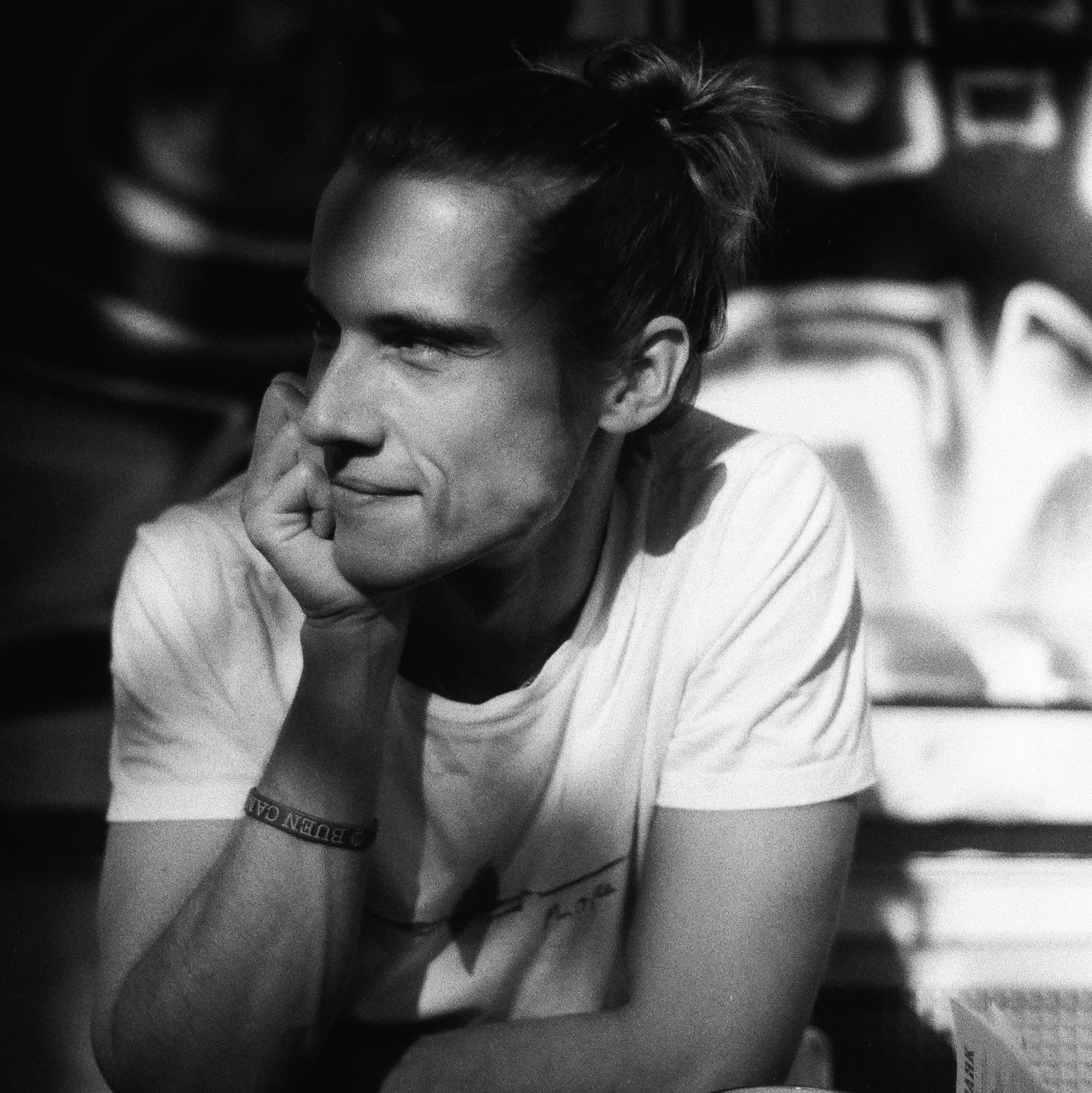
Early life, school, first steps
I was born in the former USSR and spent my early childhood in a small village, not far from what is now the border between Ukraine and Russia. In the 1980s my parents were studying engineering in Lugansk, so my twin brother and I lived with our grandparents. From those years I kept a fascination for the spiritual side of life: old wisdom traditions, the mysterious stuff, things we can't easily explain.
My family was very technical. I got introduced to computers and computer architecture early and had solid math skills long before school started. After the USSR collapsed my parents moved to Spain, where I went to a German school. Later I studied finance in Madrid and joined Deutsche Bank S.A.E., working in trade finance, trading and B2B/B2C account management. In 2008, right when the financial crisis was unfolding, I was offered to become a branch manager. I said no and moved into technology instead.
Pivot to technology
Next to finance I slowly came back to what always interested me most, software. I built trading bots and signal systems (a few of them did well for a while) and then tried other areas. An online gaming bot sold in decent numbers, and an Android app for searching and scraping music reached the top three in the charts for a short time, with more than three million users. The income from that gave me the freedom to switch fully to IT consulting.
Computer science
My first Computer Science degree I did while still in college, before university. Later, living in Mainz, I finished a second one at TU Darmstadt. Around that time I did full-time projects for several well-known companies, first on Android and then on Samsung's Bada devices. Together with my brother we built the largest independent Bada developer community, won Samsung's Developer Challenge and got more work because of it.
After Darmstadt I stopped with formal education. I became skeptical about collecting credentials for their own sake, and decided to keep learning by building the things I need, without caring about official papers. I prefer when the work speaks for itself. Over time I became more of a generalist and dived into a lot of technologies, from mobile and full-stack cloud to distributed systems.
Consulting and leadership
In the following 15+ years I worked with startups and bigger companies, slowly moving from hands-on developer roles to leadership positions like Lead Developer, Head of Engineering and CTO. And I kept launching my own ventures on the side.
DLT
I entered the DLT space around 2016-2017 and got deeply into IOTA, where I built a name as an independent developer. My Go (Golang) node was at some point supporting around 80% of the IOTA network and later served as inspiration for the official node implementation. When the DLT ecosystem got more and more chaotic, I welcomed the EU's MiCA framework and contributed as an independent consultant from the industry side. After that I was CTO in two projects I am quite proud of.
Clinq.Gold
For Clinq.Gold I designed a multi-issuer, gold-backed digital currency for African markets. It was interoperable from the start, with strong checks and balances, and meant to be the basis for a currency union without a central bank. During that time the team behind "Unit", presented publicly as possible backbone for a future BRICS digital currency, approached us to acquire our technology. We also had talks on ministerial level with several African governments. There was real momentum, but governance complexity and limited funding made progress hard. Later the technology and experience from this work helped Clinq to get a contract with the Bolivian government, to design a gold-backed currency next to their planned CBDC.
Schuman Financial
In 2024 I joined Schuman Financial as CTO and CISO, to help launch what aimed to be the first MiCA-compliant euro stablecoin. The team was excellent. But the market signals (strong competition, limited demand for euro stablecoins overall) made clear that the product needed a much sharper focus. I moved on at some point, and took with me a much deeper understanding of digital finance on system level, banking rail integrations and cross-border payment flows.
AI research
My early trading and gaming bots were my first small steps into applied AI, long before PyTorch or TensorFlow existed. In the 2010s I built AI-driven market research tools and book recommendation engines for several companies. More recently I designed arbitrage bots for v2 and v3 DEX pools.
These days I move more of my focus back to AI, especially transformers (the technology behind large language models), RAG systems and autonomous or assisted agents. I also work on DLT security topics, mostly governance architecture, and on requirements engineering, meaning translating business goals into concrete technical roadmaps.
Startups
I launched quite a few startups over the years. Most of them failed in one way or another, and each one taught me something important (I wrote about it here). One social network project ended in a small but successful exit. Another one, a DLT/GameFi startup funded by Binance Labs (investment plus program), didn't survive the shock around FTX. We just hadn't planned enough runway for that level of market stress.
The venture I am most proud of is still the IT consultancy I co-founded with my twin brother. For more than a decade we worked with loyal clients in Web2 and Web3, across many different sectors.
Mind and motion
I practice yoga since more than 15 years. First it was just a way to balance my running (currently I'm ranked roughly in the top 3% of my age group), but over time it grew into a broader personal practice.
Later I added breathwork and cold exposure training. As a certified Wim Hof instructor I joined several expeditions, one of them climbing mountains in just shorts at around −25°C wind chill. These experiences showed me very directly what mind and body can do when they are trained and supported properly.
Quite early I realized how important it is to take care of your "inner garden". Keeping an inner balance, the "wa", and being careful what you let in and out became central for me. Meditation and journaling helped a lot, and so did studying philosophy, symbolism and Jungian psychology. Over time I stepped away from the constant stream of news, social media and most modern entertainment, and focused on timeless classics and information that fits my values.
The creative process
For me most really new ideas, deeper insights and real art come from the unconscious. My job is mainly to stay open and pay attention, and to trust that ideas show up when the conditions are right. So creativity, in art or in technology, is about learning to "tune in" and listen.
This needs a certain emptiness and receptiveness in the mind and a strong connection to the unconscious. I think this is one of the things that still makes humans different, and not so easy to replace by AI.
This creative connection shows up for me in different forms: small coding experiments, drawing, photography, gardening, making music. All of it keeps me in touch with that inner source and keeps the energy moving.