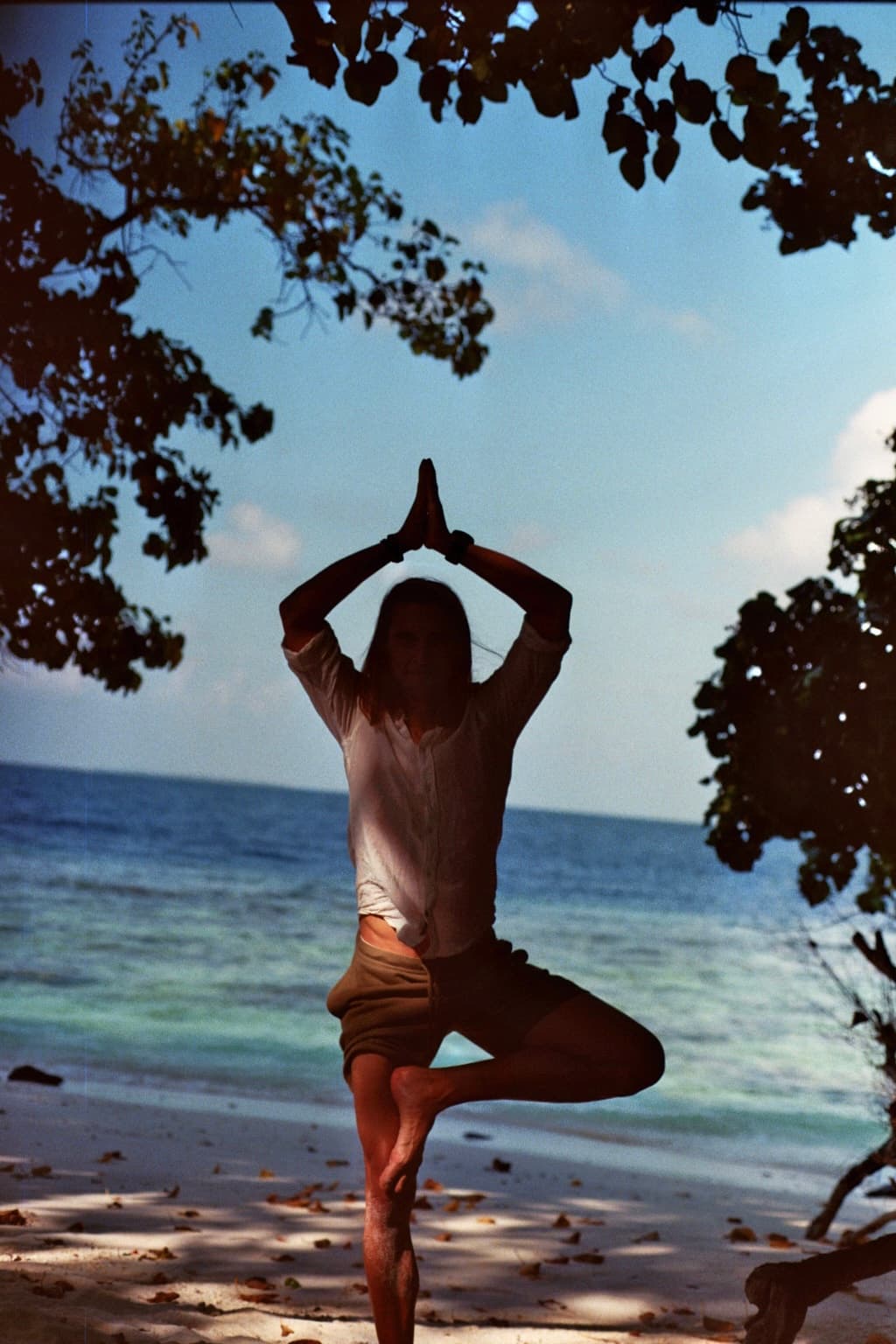
Rules, Space and Growth
There is a simple sequence I keep coming back to: rules create structure, structure creates space, and space makes room for growth.
Growth itself is rarely tidy. Most of the time it is a bit chaotic, a mix of experimenting, adjusting and playing around. Without some kind of container around it, this process easily dissolves into noise. That's one of the reasons why I value rules more than I used to. Not as something oppressive, more as something that holds a field open where something alive can happen.
On the first look rules and freedom stand on opposite sides. Rules sound fixed, freedom sounds fluid. In practice I think it is closer to the old yin-yang picture: even inside a structure there has to be movement, and even freedom needs some shape to hold it. A good structure is never completely rigid. It has something adaptable inside and it can respond to the context.
In yoga this matters a lot, because instructions are easily misunderstood as dogma. People hear alignment cues or technical principles and think they have to fulfill them perfectly, every time. I don't think this is the right spirit. Bodies are different, energy levels are different, experience is different, and so are the resources and physical possibilities of each person. Sometimes an instruction can only be approximated. What matters most is the intention: to follow the practice as honest and careful as you can, with the knowledge and ability you have right now.
A class is a small life
One reason why yoga feels so rich to me is that asana practice mirrors many other layers of life in miniature. A class is like a short simulation of living.
It has a beginning, a middle and an end. You arrive, you open up, often with something like a sun salutation that sets the tone. Then comes the main part where energy rises and attention narrows or widens, depending on what the sequence asks from you. And at the end there is savasana, the corpse pose, where everything gets still enough that you can kind of look back at what just happened.
Some classes build towards a climax, a peak pose which gathers the meaning of the whole session in one moment. The preparation, the smaller drills, opening some muscle groups and strengthening others: it all points to one posture that briefly makes the intention of the class visible.
Other classes are less obvious. You move through stretches and strength work, standing and seated poses, twists and transitions, and for a while it can feel a bit strange or even random. What was this class trying to do? Where is it going?
Often the answer comes only at the end. Lying on the floor in savasana, after the effort is over, something in the body understands before the mind does. The thought comes almost by itself: ah, that was good. The sequence made sense in experience before it made sense in theory.
Life is often like that too. Some phases clearly build towards something, others look like a loose collection of unrelated events and only much later they start to show a pattern. Yoga reminds me, that not every meaningful process looks meaningful in the middle of it.
Structure makes exploring safe
This is where the rules come back. If practice is partly exploration, it helps to have a few stable principles that make the space safe enough to explore.
Very simplified, they look something like this:
- move together with the breath
- keep the spine long and clear
- extend through the limbs with intention instead of collapsing into the shape
- pay enough attention to notice your own limits
- move slowly enough that you can still choose, and not only react
None of these are strict commandments. I would call it a middle-firm structure: stable enough to orient you and soft enough to leave room for adaptation. They are not there to turn yoga into a performance of correctness, they are there to support attention, safety and depth.
If you ignore the breath, the movement becomes mechanical quite fast. If attention disappears, ambition takes over. And if the body is pushed without sensitivity, the wish to "do the pose properly" can become exactly the thing that separates you from the practice. The structure is there so the form does not turn into empty imitation.
What I find interesting is that this works outside of yoga as well. In many areas of life people struggle with either too little structure or too much of it. Too little and everything stays vague and unstable. Too much and there is no space left to respond to reality. The art is to find a form that breathes.
Intention over perfection
This is one of the main things I want to keep in mind while I continue teaching: rules are important, but not absolute in the crude sense.
There will always be situations where someone can't meet the ideal version of a pose or an instruction. Maybe the mobility is not there yet, maybe an old injury changes the range, maybe the nervous system is just tired that day. Or the person simply doesn't have the embodied understanding yet for what I am asking. None of that makes the practice invalid.
The more useful question is usually: are you relating to the instruction sincerely? Are you trying, within reason, to move in the right direction? Do you stay attentive enough to feel the difference between effort and strain, steadiness and stubbornness, discipline and violence against yourself?
For me this is where the real practice starts, in meeting the shape honestly instead of showing off a finished one. You can learn a lot when you see where you compensate, where you rush, where you hold the breath, where you resist discomfort or where you go beyond your limits only to match some image of how the pose should look like. So the rules don't only shape the body. They show you the mind too.
Somewhere between form and space
The atmosphere I like most in yoga is neither rigid nor vague. It is somewhere in between: disciplined but not hard, open but not careless.
I want the room to feel structured enough so people can trust it, and spacious enough that they still discover something for themselves inside of it. For me it means to respect alignment and breath, and at the same time accept that growth has its own rhythm. It is not always linear and it doesn't always look elegant while it's happening.
If I had to put all this into one picture, it would be slow and deliberate movement between structure and space. The structure gives the ground, the space gives room for play, sensation and insight. And from this interplay something can unfold that is stronger than rigidity or randomness alone.
This is how I understand yoga practice more and more, and maybe life as well. We don't need rules because reality is a machine. We need them because growth is messy, and a good container helps us to stay present long enough until the meaning shows up.